
Install PPF Before Trouble Starts: Why Timing Matters More Than Most Drivers Think
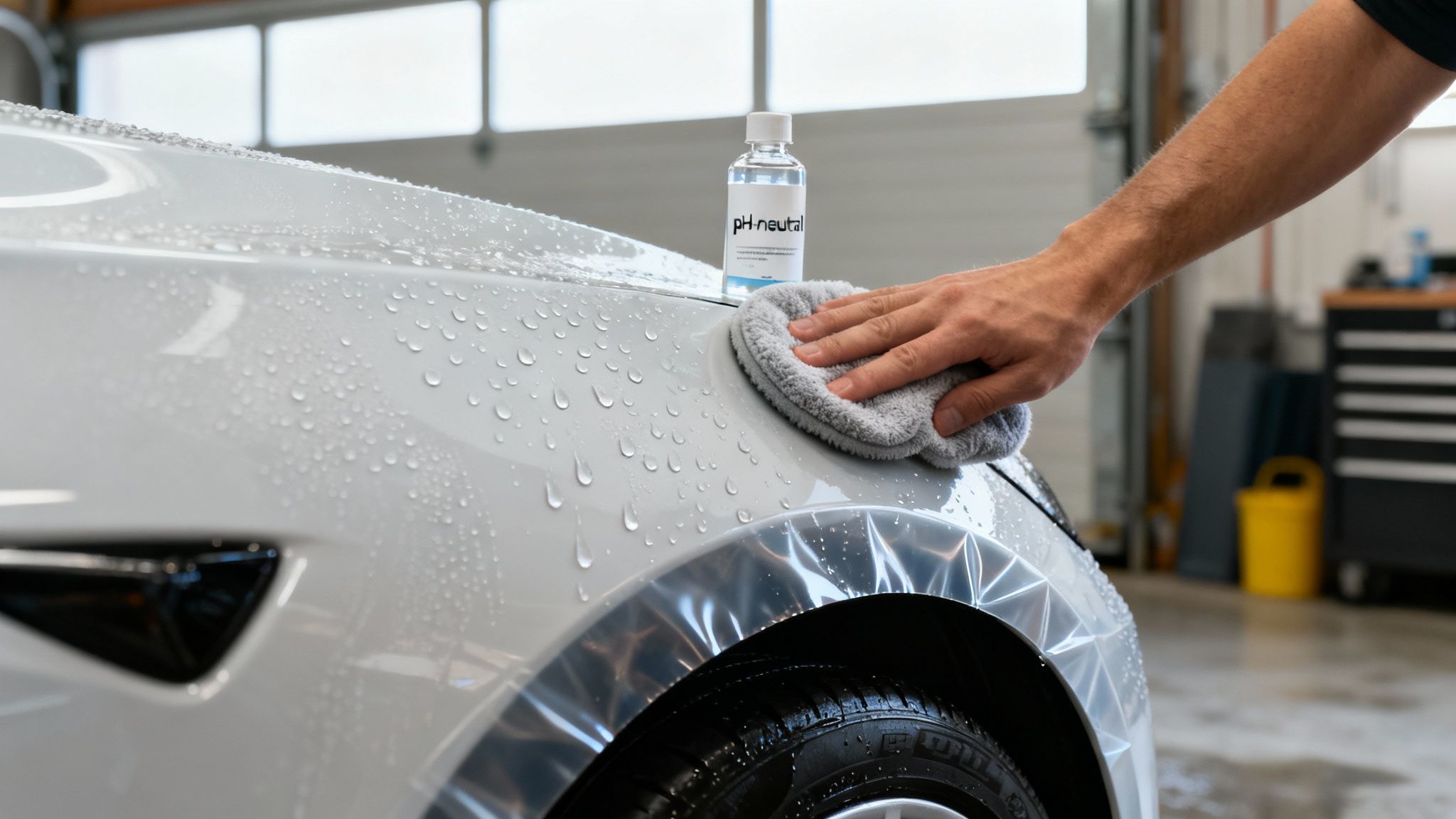
Most car owners think about paint protection film the moment they notice a chip in the hood or a fresh scratch along the door. That impulse is understandable — nobody wants to see damage spread — but by that point, part of the story has already been written. The real question isn’t whether PPF is worth it. It’s when you apply it that determines how much value you actually get.
This isn’t just a matter of aesthetics. It’s a practical financial and logistical decision that plays out differently depending on whether you act before or after damage occurs.
Let’s break down both scenarios honestly.
The Short Answer Before We Go Further
- Before damage: Best results, lowest cost, cleanest install. Apply as early as possible.
- After damage: Still worth doing but pain corrections come first. Expect extra prep time and cost.
- Both cases: PPF is only as effective as the surface beneath it. Preparation is non-negotiable.
The Case for Applying PPF Before Any Damage Occurs
When a car rolls off the lot — or even when you’ve owned it for a year without visible wear — the paint is in its best possible state. Applying paint protection film Winston-Salem, NC at this stage means the film bonds to an unblemished surface, which gives installers the cleanest possible work environment and the most uniform adhesion.
There’s a compounding advantage here that’s easy to overlook. Film applied to pristine paint traps nothing underneath it. No micro-scratches. No oxidation. No swirl marks from prior washes. This matter because once film goes on, what’s beneath it stays beneath it. If the surface has pre-existing imperfections, those become permanent features, visible through the film and impossible to address without removing it entirely.
From a cost perspective, proactive installation is almost always the more economical path. You’re not paying for paint correction before the install, and you’re not dealing with partial replacements down the road when damage hits an unprotected zone.
A PPF installer in Winston-Salem, NC will tell you the same thing: full-coverage installs on clean paint are straightforward. Installs after damage require additional prep steps that add time and cost.
There’s also peace of mind worth accounting for. Drivers who protect their vehicles early tend to worry less about road debris, parking lot encounters, and bird droppings — all of which can etch or chip paint within hours if left untreated. The film absorbs that abuse so the paint doesn’t have to.
Applying PPF After Damage: When it still makes sense
Post-damage PPF installation isn’t a lost cause — it just requires more groundwork. If a vehicle has suffered rock chips, scratches, or surface scuffs, the responsible approach is paint correction before any film goes on. A reputable PPF shop in Winston-Salem, NC won’t skip this step. They’ll assess the paint condition, address imperfections through polishing or spot repair, and only then proceed with the install.
The upside of this scenario is that it stops the damage clock from running further. Even corrected paint that gets re-exposed to the elements will continue to wear. PPF applied post-repair locks in the corrected surface and prevents future deterioration. So, while the timing isn’t ideal, it’s far better than leaving corrected paint unprotected.
That said, drivers should be realistic about what post-damage PPF can and can’t do. It won’t erase deep scratches that required filler or respray. It won’t make a car look like new if the underlying paint has significant wear. What it does is stop the bleeding — prevent further damage from occurring on what remains of the original or repaired surface.
Anyone searching for PPF near me Winston-Salem after noticing damage should consult with an installer before assuming film alone will solve the problem. A thorough inspection will tell you whether paint correction is needed first and how extensive the prep work might be.
Side-by-Side Comparison: Pre-Damage vs. Post-Damage PPF
| Factor | PPF Before Damage | PPF After Damage |
| Surface Condition | Optimal — no prep needed | Requires paint correction first |
| Installation Cost | Lower overall | Higher due to prep work |
| Film Adhesion Quality | Maximum | Good if prep is thorough |
| Long-Term Value | Highest | Strong — stops further damage |
| Appearance Result | Factory-fresh look preserved | Corrected paint protected going forward |
What Professional Installers Recommend
Across the board, professionals in the auto paint protection Winston-Salem space recommend early installation, ideally within the first few months of ownership, before the vehicle accumulates any meaningful road exposure. New cars especially benefit from this timing because their factory paint hasn’t yet faced the kind of ultraviolet exposure or environmental contamination that degrades clear coats over time.
For used vehicles or cars with existing wear, the recommendation shifts. Before you search for PPF Winston-Salem, NC, have the paint professionally evaluated. Knowing exactly what condition the surface is in will help you understand what level of prep is needed and set realistic expectations for the final result.
The consistent thread in both scenarios is that PPF works best when the surface beneath it is as clean and intact as possible. Whether you’re protecting new paint or corrected paint, the principle is the same: the film is only as good as what it’s covering.
The Bottom Line
If you have the opportunity to protect your car’s paint before damage occurs, take it. The logistics are simpler, the results are better, and the long-term cost is lower. That’s not a hard argument to make once you’ve seen the difference between a car that was protected early and one that wasn’t.
Post-damage PPF is still a sound investment but treat it as a recovery strategy, not a preferred one. Work with a qualified installer, invest in the paint correction that the surface needs, and understand that you’re protecting corrected paint rather than original paint. The outcome can still be excellent with the right approach.
For drivers in the area, connecting with a trusted PPF installer is the best first step regardless of when you’re making the decision. A professional assessment will give you the clearest picture of where you stand and what your options actually are.


